

Miami’s condominium market is one of the densest and most dynamic in the United States, yet many condo owners are facing a new reality: market signals that no longer align with what they assumed about their own units. Understanding how the market is reading condo value—but not just the unit itself—has become increasingly crucial.
Miami’s Condo Inventory: A Massive and Complex Market
Florida is home to a very large condominium stock — more than 1.5 million condo units statewide — of which over 20% are located in Miami-Dade County alone.
Given that many of these units are occupied and frequently traded, this means hundreds of thousands of potential condo owners or investor-owners reside in the greater Miami area.
While exact owner counts are difficult to pin down in real time, Miami-Dade County had over 1,070,000 housing units as of the 2020 census, with about 50.8% owner-occupied and 49.2% renter-occupied.
Because a meaningful share of owner-occupied housing in the county includes condominiums — and considering the large condominium inventory — it’s reasonable to infer that well into the tens of thousands of residents in Miami are condo owners rather than renters or single-family homeowners.
A Shifting Market: Conflicting Signals for Owners and Sellers
In 2025, Miami’s condo market is not static. Recent MLS data shows condo sales have slowed year-over-year, with declines in closed transactions and a significant increase in active listings.
For many owners, this has translated into less predictable pricing outcomes than in previous years.
Consider how current conditions differ from what many owners have historically expected:
Inventory is rising rapidly. Active listings in Miami-Dade climbed sharply as supply outpaced demand.
Sales volume has softened. Condo sales declined compared to the previous year, signaling a shift in market balance.
Market nuance is growing. Units in older buildings — which make up a large share of Miami’s condominium inventory — continue to trade differently than newer developments, with older properties sometimes selling faster or at different prices than expected.
The Core Issue: Owners Aren’t Clueless — the Market Has Shifted
Here’s the disconnect many long-time owners are feeling:
A condo owner may know their unit’s floor, finishes, view, and history as well as anyone — but that doesn’t automatically tell them how today’s market values those same characteristics.
That’s because common valuation metrics — like zip code averages or city-wide pricing indices — can wash over important local nuances that matter in high-density condo markets like Miami.
Pricing Gaps Aren’t Always About the Condo — They’re About the Market’s Lens
In practice, units that look similar on paper can trade at very different prices. This is not speculation — it’s observable market behavior:
Miami’s condo inventory and sales statistics show that market conditions matter more than static attributes like square footage or age.
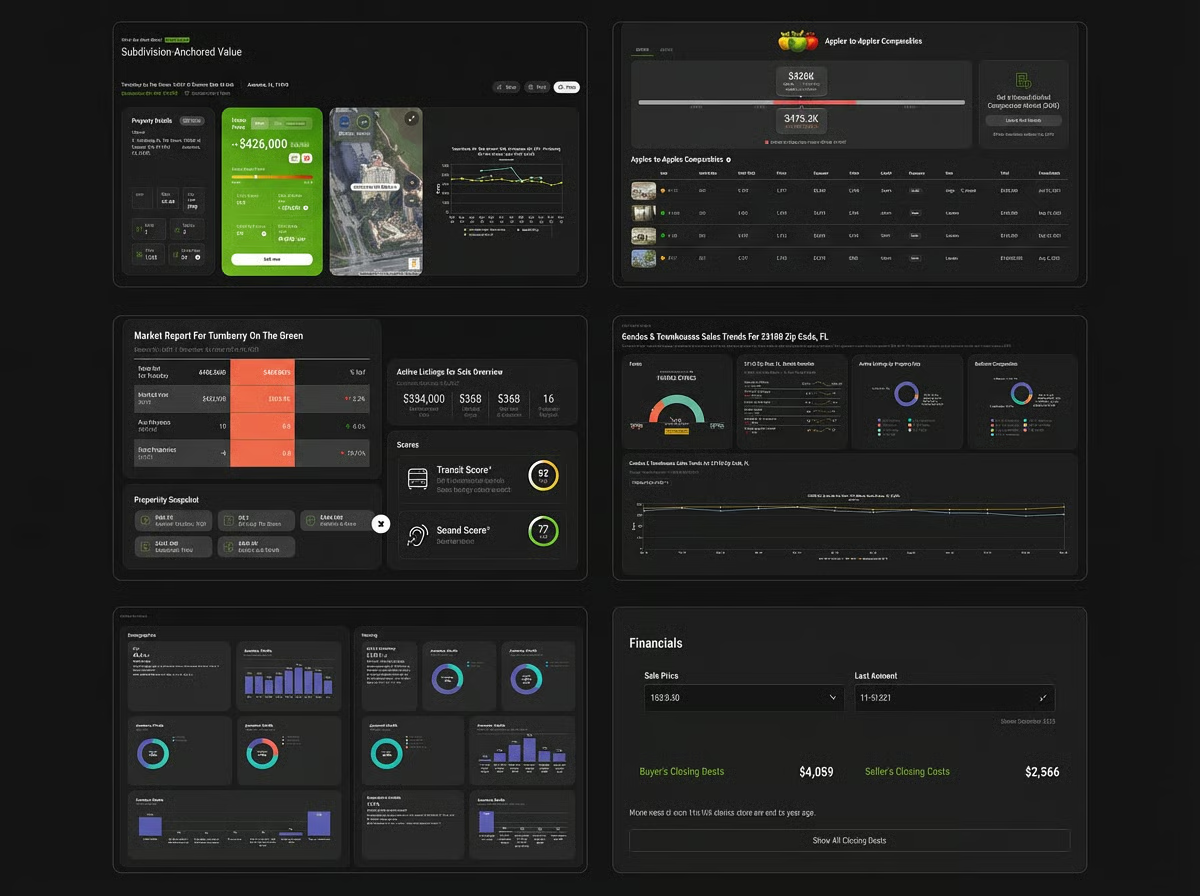
In many cases, recent sales pairs that appear “apples-to-apples” in a zip code comparison fail to reflect actual market context, such as building amenities, financial health of the community, or localized demand within the subdivision.
This leads to a common pattern: despite owning a unit with well-understood features, an owner can still face price outcomes that feel inconsistent or surprising compared to nearby sales.
So What’s Changed?
Two forces have reshaped how condo pricing is interpreted in Miami today:
Market Dynamics Have Shifted Sharply — rising inventory and softer sales mean buyers can be more selective, and comparable sales don’t always reflect present conditions.
Granular Local Context Matters More Than Ever — comparing units solely by city, zip code, or simple metrics can mask deeper influences on price, like subdivision-level trends.
Looking Ahead: Context Over Convention
For condo owners and prospective sellers, the takeaway is this:
Knowing your unit is only part of the equation.
Understanding how the market reads it today is what determines pricing outcomes.
In a fast-changing environment like Miami’s condo market — where inventory, interest rates, financial conditions, and buyer preferences all interact — owners who rely on broad averages or traditional comps may be basing decisions on incomplete signals.
Conclusion: The Value Is in the Lens
Miami’s condo owners are knowledgeable about their own property — but in a market this nuanced, understanding how the market interprets condo value today requires a different lens. As pricing behaviors evolve and inventory patterns shift, a deeper contextual view becomes essential for anyone thinking about selling, holding, or simply understanding their asset’s place in the broader condo ecosystem.

Comments