

Buying or selling a home is one of the most significant financial decisions most people will ever make. Yet despite the size and importance of the housing market, many people still rely on tools that were designed primarily to display listings rather than explain how markets actually function.
Listings show what is currently available for sale. They provide photos, prices, and property details. But listings alone rarely explain the competitive market behind those homes.
Understanding that market is often what determines whether a homeowner makes a confident decision.
Subdivisions.com was created to help solve that problem.
Moving Beyond Listings
For more than two decades, real estate platforms have focused on presenting listings organized by:
ZIP codes
geographic proximity
price ranges
search filters.
While these tools make it easier to browse homes, they often overlook how housing markets are actually structured.
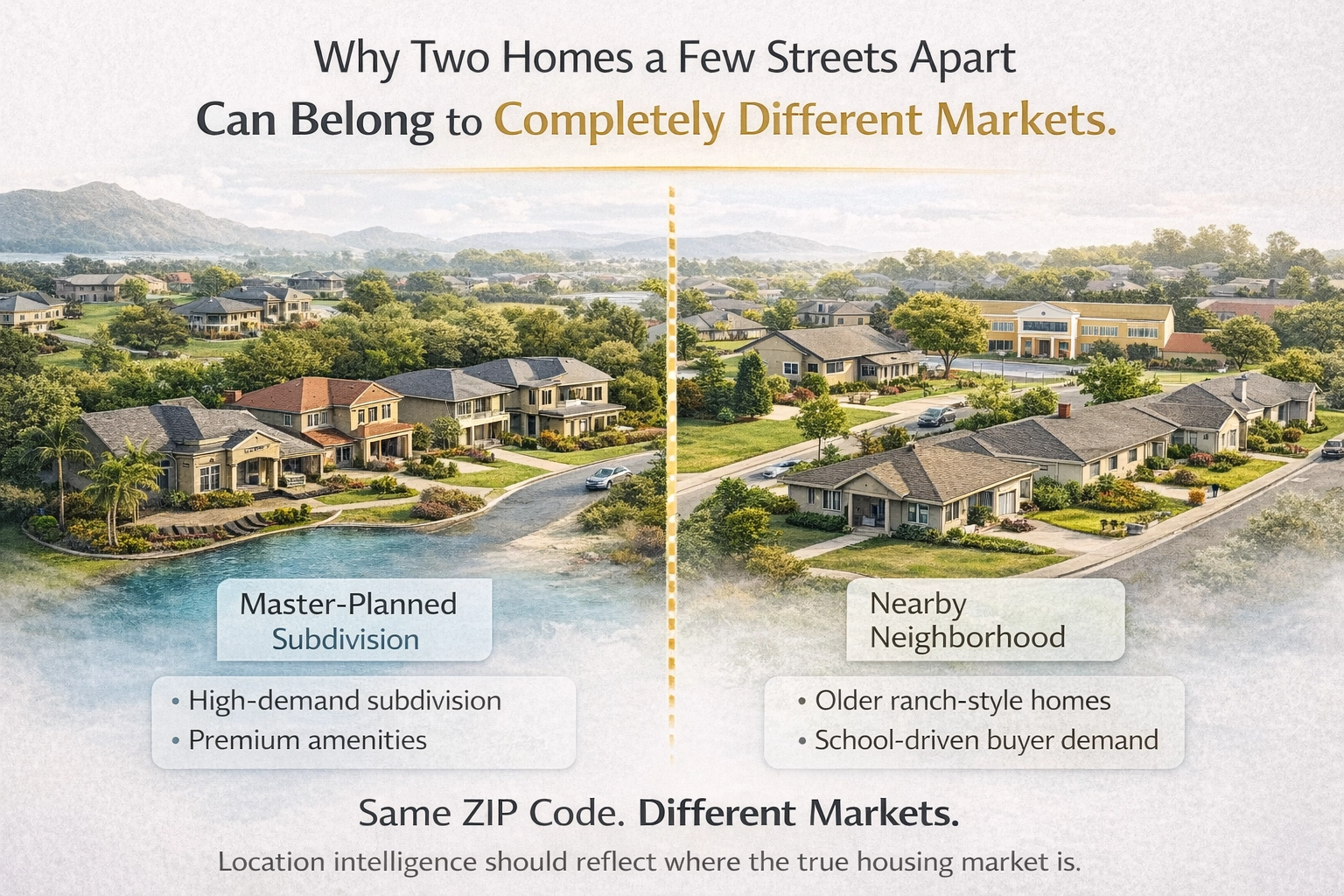
In reality, homes compete within communities—subdivisions, condominium buildings, and residential environments where buyers compare properties directly.
A home in one subdivision may compete with only a handful of nearby communities. A condo unit may compete primarily with other units within the same building or stack line.
These environments create micro-markets that shape pricing behavior and buyer demand.
Yet these market structures are rarely visible when browsing listings alone.
Understanding the Market Behind the Property
Subdivisions.com approaches real estate differently.
Instead of focusing only on listings, the platform organizes housing data around subdivisions, buildings, and communities—the environments where homes actually compete.
By structuring property data this way, the platform helps reveal the signals that drive real estate decisions, including:
apples-to-apples comparable sales
subdivision-level pricing trends
local market positioning
location intelligence that reflects how buyers evaluate homes.
This approach allows homeowners and buyers to see how properties relate to the competitive market around them rather than viewing listings as isolated properties.
Bringing Clarity to Housing Markets
Residential real estate represents more than $45 trillion in household assets in the United States, according to the Federal Reserve.
Despite the scale of this market, many real estate decisions are still made using fragmented information.
When the competitive market environment is not clearly understood, homeowners may struggle to interpret pricing signals or determine how their property compares to others.
By organizing housing markets around communities, Subdivisions.com helps provide the context needed to make sense of those signals.
Instead of asking only:
“What homes are nearby?”
users can better understand:
“What homes actually compete with mine?”
Confidence Through Market Understanding
For homeowners, buyers, and real estate professionals alike, better decisions often begin with a clearer understanding of the market.
Subdivisions.com aims to make that understanding more accessible by transforming fragmented property data into structured market intelligence.
Because ultimately, successful real estate decisions depend on more than seeing listings.
They depend on understanding the market behind them.

Comments