

By: Jake Miakota, Founder/CEO of Subdivisions.com
The real estate industry is currently navigating a massive technological paradox. We are deploying trillion-dollar Artificial Intelligence models to predict property values, manage risk, and automate underwriting. Yet, we are feeding these sophisticated "deep" models "flat" data that hasn't evolved in twenty years.
The industry has reached a breaking point where our digital maps no longer match our physical reality. At Subdivisions.com, we have a simple saying: Data isn't flat, and it’s time our data caught up to our reality.
The Downstream Dilemma: The Cost of Guessing
For two decades, "Search 1.0" has relied on two primary keys: Latitude/Longitude and ZIP codes. On a 2D map, this makes sense. But we don't live on a 2D map. We live in a world of vertical density and complex architectural subdivisions.
When a legacy portal or an Automated Valuation Model (AVM) looks at a high-rise, it sees a single point on a map. It treats a $2.2M penthouse with an unobstructed ocean view and a $490K street-level unit looking at a brick wall as the same data point because they share the same GPS coordinate.
This is what we call Probabilistic Noise. By averaging these vastly different assets based on proximity, the industry has accepted a systemic 18% valuation error rate. In a high-interest-rate environment, that 18% isn't just a "glitch"—it’s a multi-billion dollar fiduciary liability.
Moving Upstream: The Layer 0 Standard
To fix the hallucination, you have to move "Upstream." You have to move past the transaction and into the Identity of the asset itself.
Subdivisions.com was built to be the Infrastructure Layer for the built world. We spent four years in the most complex vertical laboratory in America—South Florida—building a deterministic engine that resolves the industry’s "Architectural Debt."
1. Deterministic Entity Resolution
Real estate data is messy. A single building can have dozens of "aliases" across the MLS, tax records, and floor plans. Our engine resolves these unstructured aliases into a single, permanent Entity ID. This is the "Golden Record" that allows banks, agents, and AI to speak the same language.
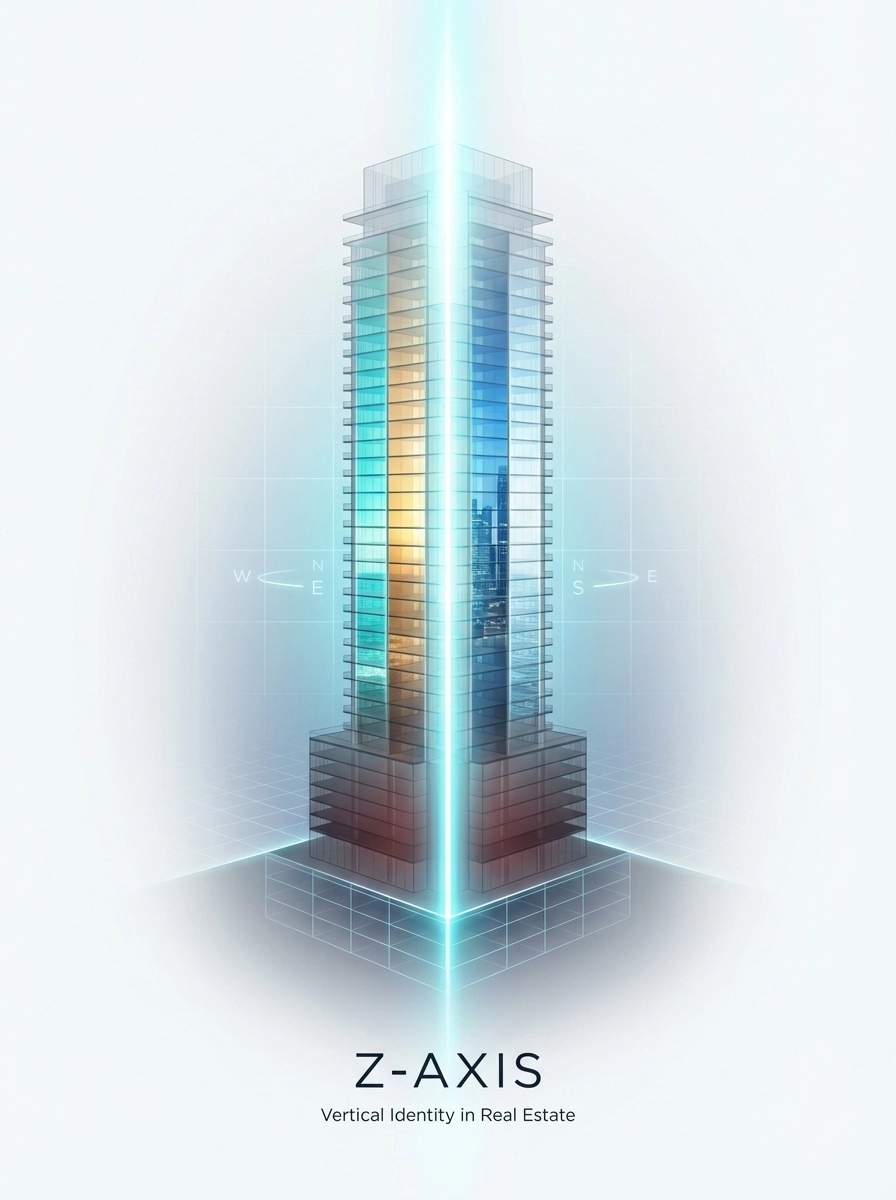
2. The Z-Axis & View Corridors
We don't just see where a building is; we see what is inside it. Our schema maps the "Z-Axis":
Floor Bands: Recognizing that value climbs with elevation.
Stacks and Lines: Understanding that the "02" line is not the "04" line.
View Corridors: Validating whether a unit looks at the Atlantic Ocean or the parking garage.
3. The "3-Apples" Validation
To make this human-readable, we’ve introduced the 3-Apples System.
The Green Apple: A pure, peer-to-peer match. Exact stack, identical floor band, verified view. This is the only match that matters for a "True Comp."
The Yellow Apple: Similar, but structurally different. A "near-miss" that requires a price adjustment.
The Red Apple: An incorrect comp. A "hallucination" by a 2D model that should be excluded from the analysis.
The Road to a Better World
Why does this matter beyond the balance sheet? Because Information Superiority belongs in the hands of everyone—not just the institutions with the biggest data science teams.
By laying down the road for Settlement-Grade Property Identity, we are enabling:
Fairer Markets: Homeowners can finally defend their home's true value with data that accounts for their specific view and floor.
De-Risked Finance: Lenders can underwrite vertical assets with the same confidence they have in the S&P 500.
Intelligent AI: We are providing the "Clean Water" for the AI era, ensuring that the next generation of real estate tools is grounded in reality, not guesses.
Conclusion
Infrastructure is not loud; it is inevitable. The era of the "Flat Map" is over. As we move into a future defined by vertical density and automated finance, the "Z-Axis" is no longer optional—it is the foundation.
Data isn't flat. It’s time we started acting like it.

Comments